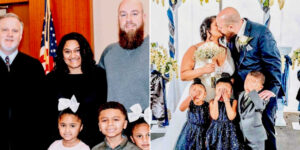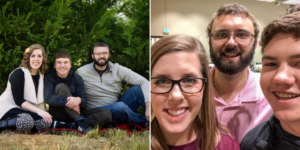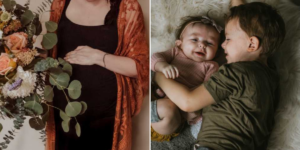
It’s hard to pinpoint what draws so many stares to our family. We often catch curious glances that quickly turn into questions—questions I still struggle to answer in ways that feel both appropriate and sufficient. Our family history is communal, yet built from deeply personal and independent stories, and that tension leaves me wondering: how do we live our truth boldly while protecting the narratives that formed us? How do we move through a world that repeatedly signals we don’t quite add up?
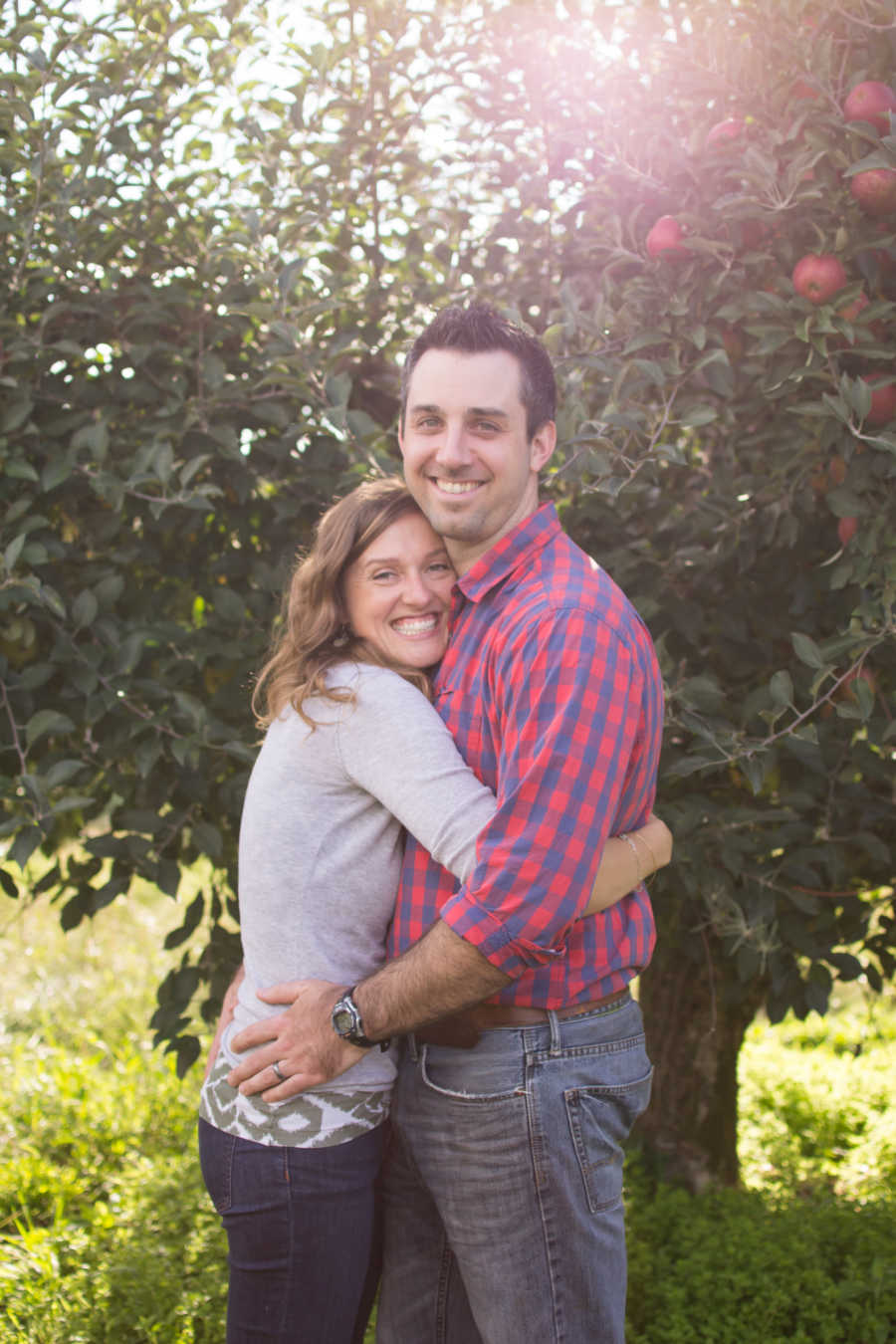
It makes the most sense to begin before the beginning. I’m a teacher, and I’ve always worked in schools serving students with high levels of trauma. That experience came with steep learning curves for me as a white, middle-class woman raised in a white, middle-class town. By the time my husband and I married in 2008, I felt less naïve, yet still unprepared for the shift ahead as we pursued domestic adoption while simultaneously undergoing fertility treatments for undiagnosed infertility. Somewhere along that path—around the time we were preparing our book for potential birth families—we paused and changed direction, deciding instead to become foster parents. There wasn’t a single defining moment, just a slow realization: Why aren’t we fostering? We can do this. I had taught long enough to see the need and loved enough children with trauma-induced challenges to feel somewhat equipped. A few months after becoming licensed, we welcomed a 2-year-old boy into our home.
Fostering is beautiful, heart-wrenching, complicated, rewarding, deeply personal, and often invasive. Becoming instant parents was overwhelming—I vividly remember calling a friend and asking, “What do you even feed a 2-year-old?” Raising a child of a different race was equally overwhelming. As white parents to a Black son, we learned to ask for a lot of help. (I still cringe remembering the time I accidentally shaved his toddler head bald before frantically finding a Black barber—one we’ve now visited every other week for nearly eight years.) Navigating relationships with his birth family added yet another layer of complexity. Foster care is uniquely devastating for everyone involved.
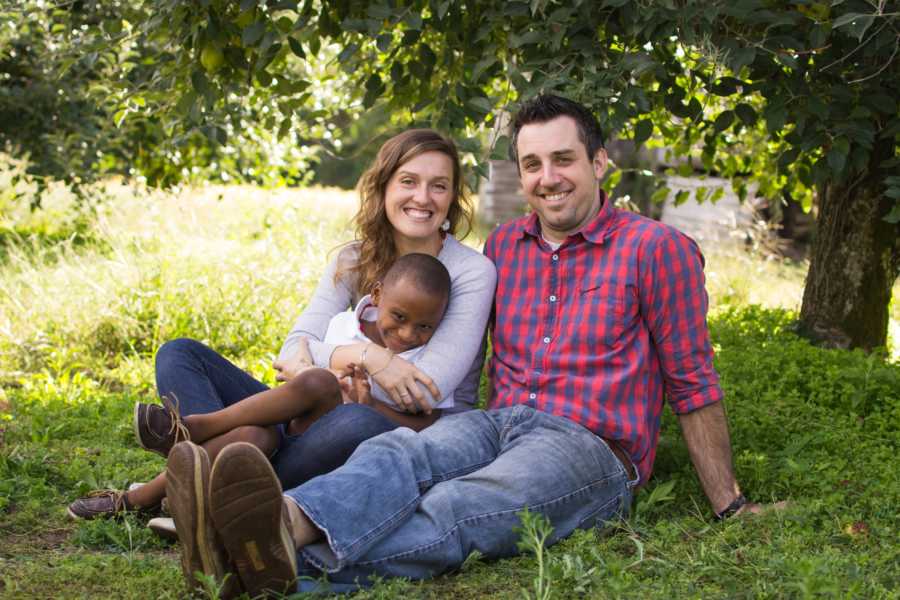
Slowly, though, we learned what worked for his skin and hair. We pushed ourselves beyond our comfort zones and worked hard to listen well. With cautious affection, genuine familial love grew between us and our son’s birth family. When we adopted him at age three, we continued choosing one another. They have taught me more about grace than almost any relationship in my life. Watching our son grow within one large, extended family is a profound gift.
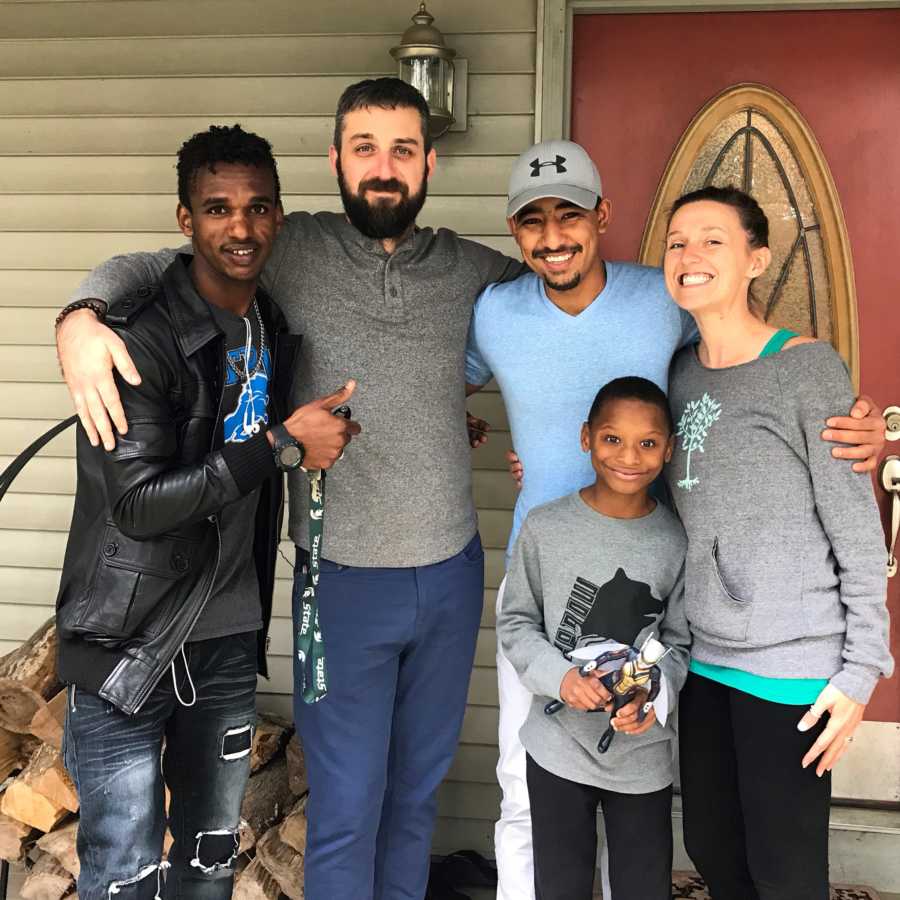
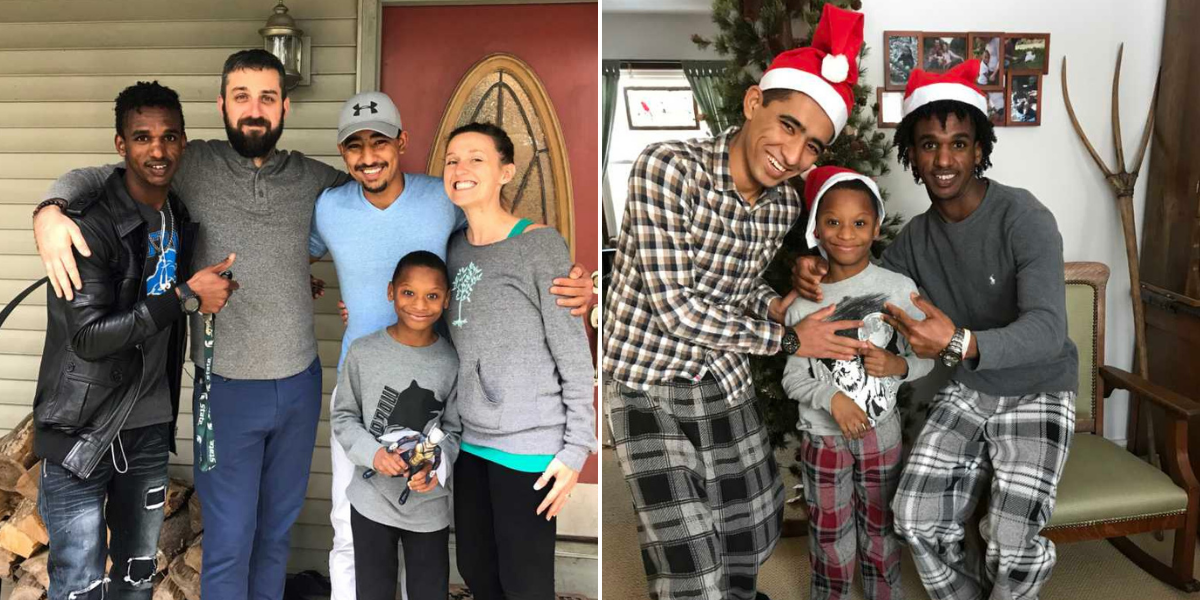
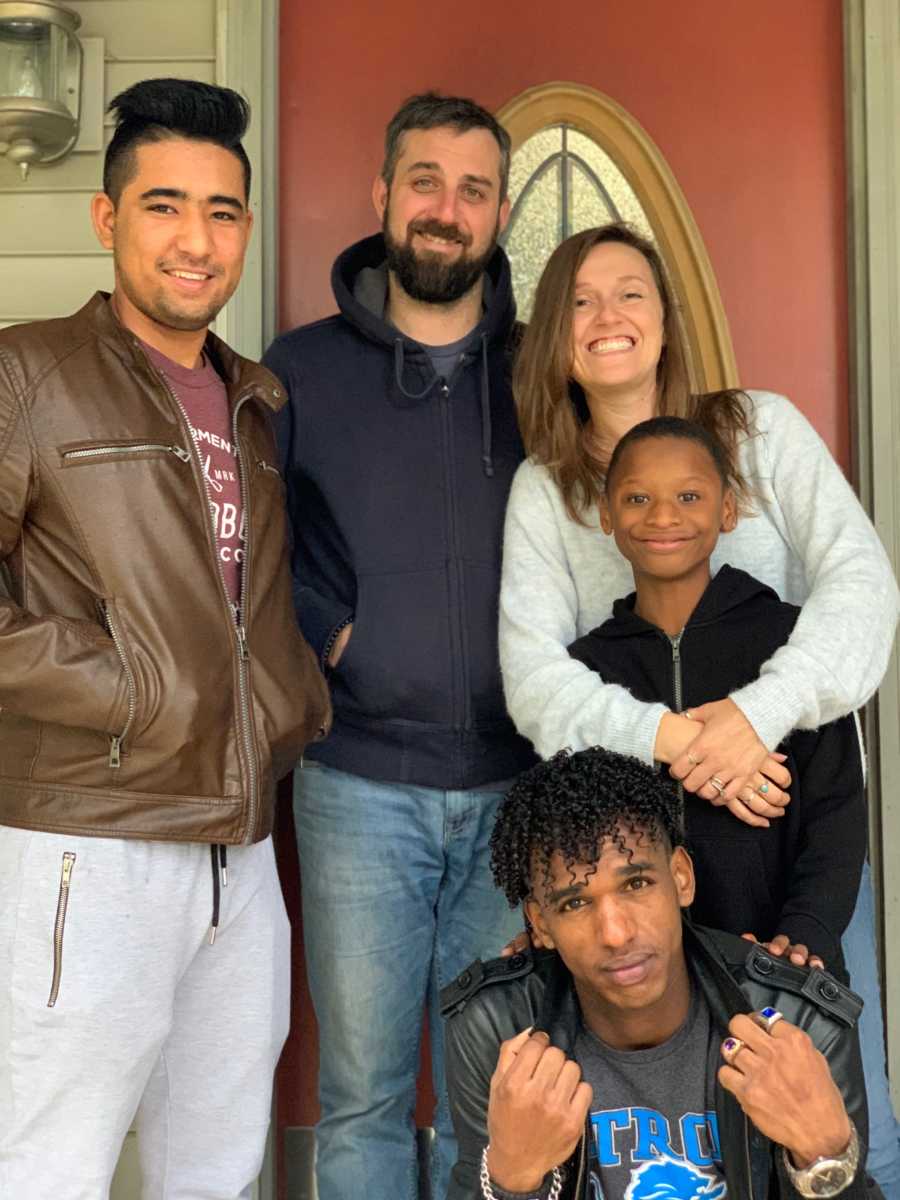
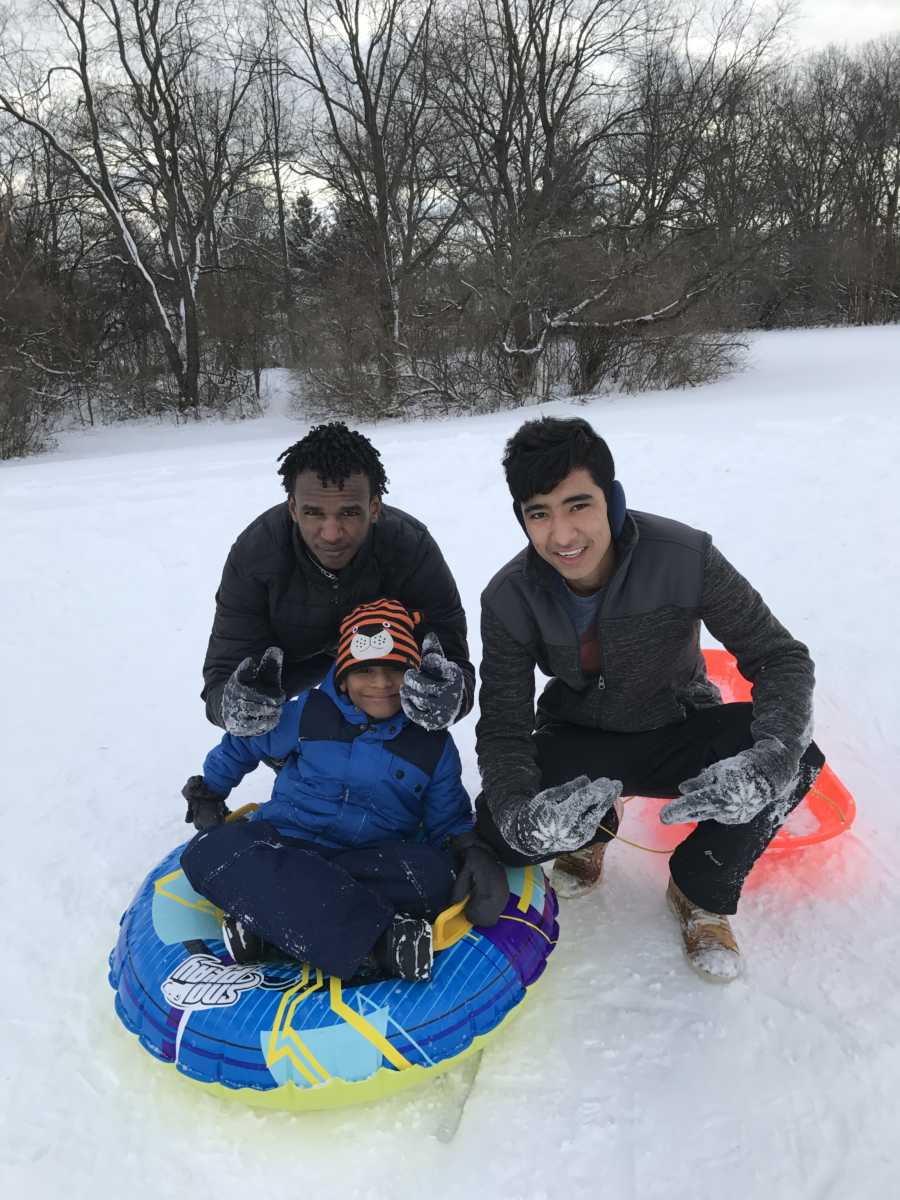
Our family grew again when our son was six. What began as occasional volunteering through a refugee resettlement agency at a boys’ home for independently resettled minors gradually turned into welcoming two 17-year-old boys—one Afghan and one Eritrean—into our family. Built on trust, patience, and mutual commitment, the transition unfolded naturally. Now 20, they are essential to who we are, and we can’t imagine our family without them.
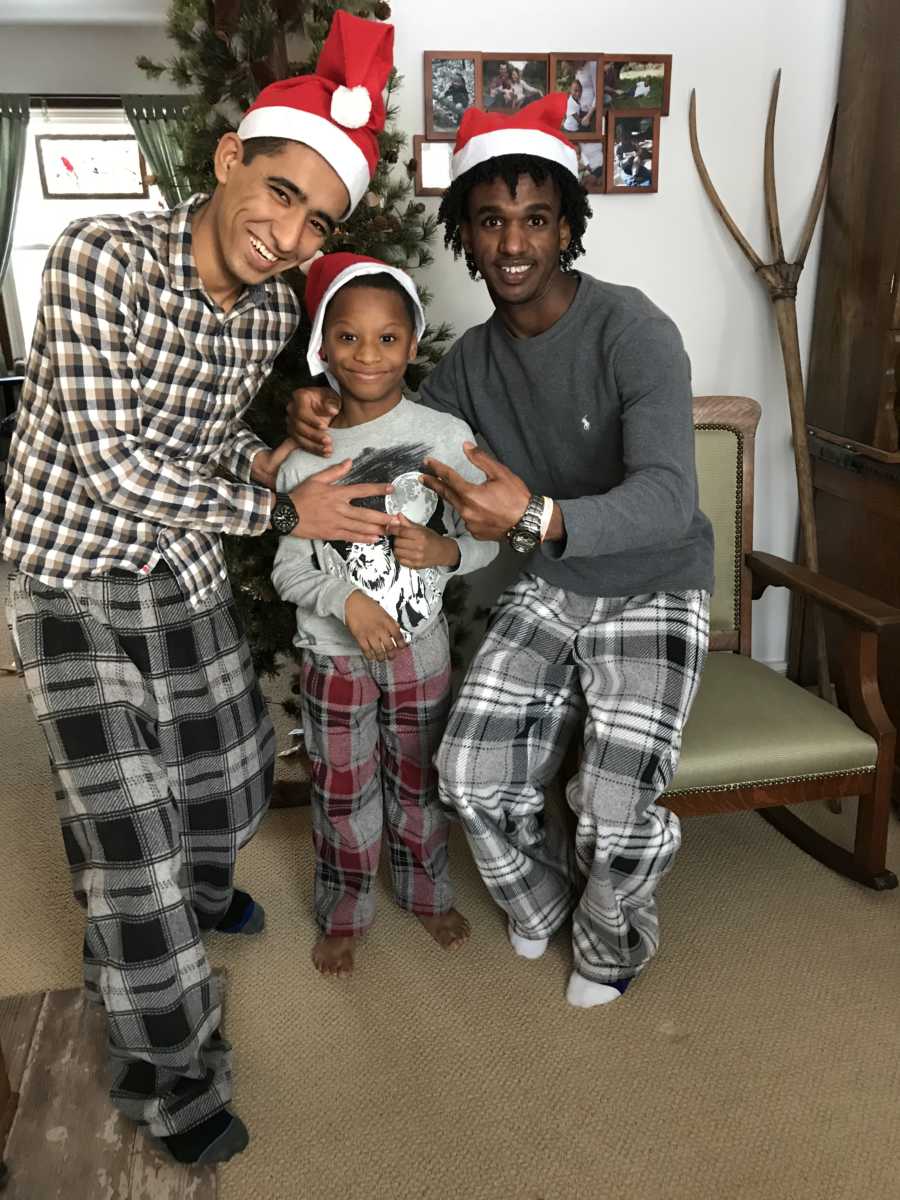
Each of our boys carries histories that are intricate and deeply personal—stories that are not mine to tell, though I’m honored to hold many of them. Their strength evokes a deep admiration, rooted in the knowledge that much of who they are comes from their own resilience and tenacity. Watching them mature is one of the greatest honors of my life.
And yet, because we are a family spanning multiple ethnicities, nationalities, and religions, we encounter frequent questions and stares that are never simple to answer. Even basic explanations invite follow-ups. When I mention having two 20-year-olds and a 10-year-old, people ask if the older boys are twins, comment on the age gap, or squint as they calculate how old I must have been to have children that age. (I’m 38; my husband is 36.) Even referencing adoption is complicated. Mentioning foster care can invite pity or prying, and our older boys aren’t legally adopted at all.
To be clear, questions matter. They expand understanding and build community. But awareness matters, too. Even well-intended curiosity can be exhausting. Beginning with, “It’s okay if you’re uncomfortable answering this,” and accepting a boundary without offense can go a long way. So can being mindful of how many questions are asked.
Though I’m not ashamed of any part of our journey, I often wish we could be seen without being reduced to labels like “foster care,” “adoption,” or “refugee.” These descriptors help people understand us, just as race does—but they’re also one-dimensional and heavy with assumptions. It leaves me wondering how any of us in unconventional families learn to weather the stares and the open-mouthed curiosity.
What I do know is this: in my eight years of motherhood, my understanding of bias and racism has grown exponentially—through the stares we receive as a family and through the lived experiences of our sons. My youngest was called the n-word in kindergarten. He’s been told his skin looks like poop. Once, someone yelled a racial slur from a truck as the five of us walked down the street. I know my older two shield me from some of their experiences. I worry about all three of them constantly. The privilege of preserving childhood innocence was never an option for us; society made that decision for me.
As a white adoptive parent to sons of color, I am forever indebted to adult adoptees, birth mothers, and people of color who have shared their lives—publicly and privately—to help me better meet my boys’ needs, needs I will never fully understand or meet on my own. I lean heavily on our extended community to step into spaces I cannot. There is simply too much I will never know.
Unconventional parenting has taught me humility, listening, and how to sit with discomfort. I’ve learned that we owe no one justification for our family. Confusion, curiosity, or fascination does not require an explanation—even when the question comes from a kind place. Responding with, “That’s not my story to tell,” may feel awkward, but awkward does not make it untrue.
On days when life feels like a fishbowl, or when I’m cornered into explaining—at doctor’s offices, on school forms, or anywhere family history is required—I take comfort in knowing we are part of a larger collective. One unconventional family after another, we’re stepping forward together. The more visible we become, the closer “unconventional” moves toward “unsurprising.” That shift matters—because we matter.
My family is not one-dimensional. Unconventional families are not clichés or curiosities, and we owe no one an explanation. We are everyday families built from intricate paths, and there is pride in that truth—each time we describe those we love, separately and together, uniquely and whole. Family requires no parameters.