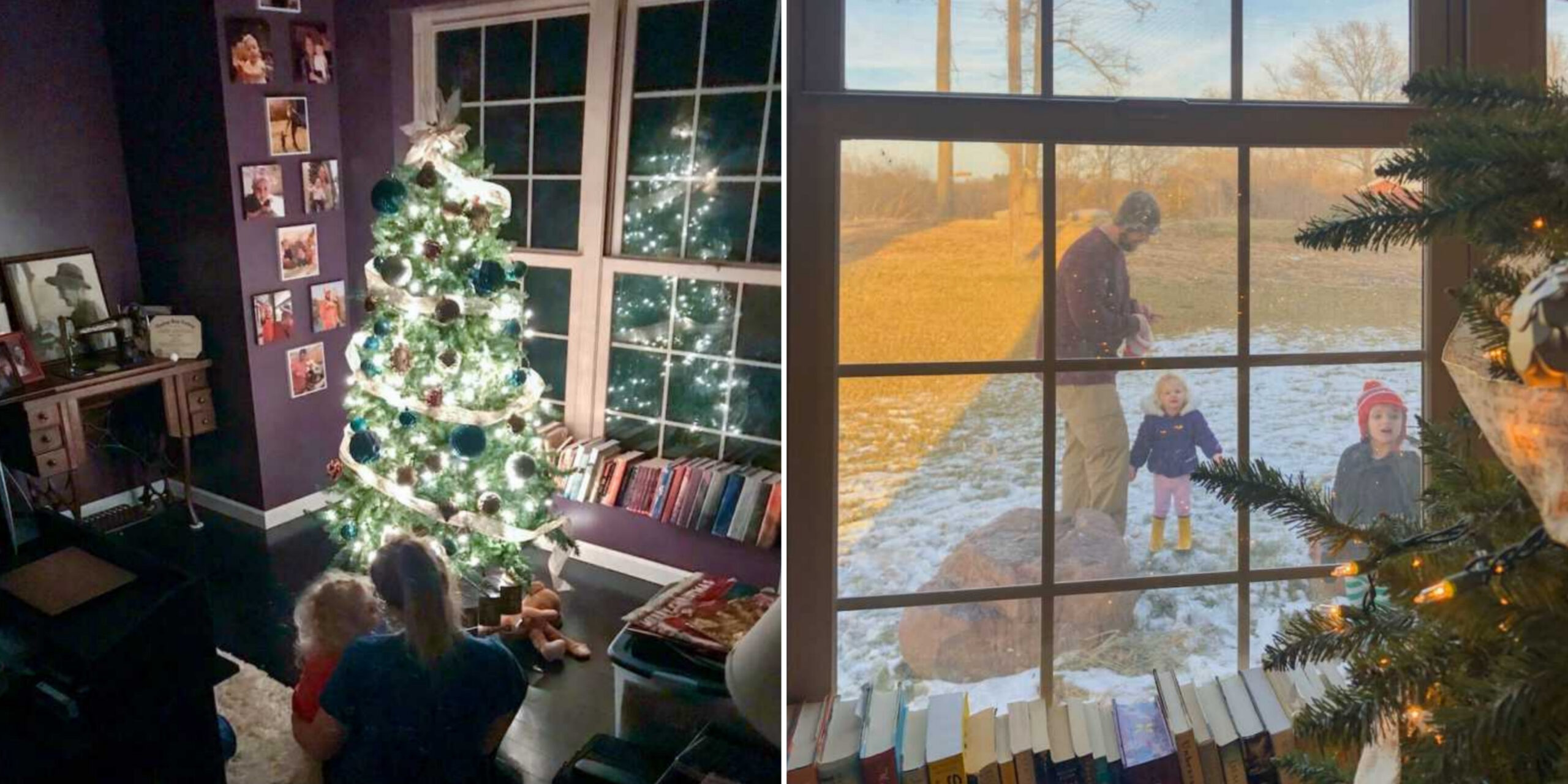
I was a teenager when I first rediscovered the true magic of Christmas morning. The days of bursting from my bedroom in search of Santa’s gifts, leaving behind half-eaten cookies on the counter, were long gone. I had drifted somewhere between the wonder of being gifted those magical childhood memories and the joy of creating them for others. I was “kid enough” to feel excitement over presents and the soft hush of falling snow, yet “grown-up enough” to find deep, genuine joy in the quiet, simple moments.
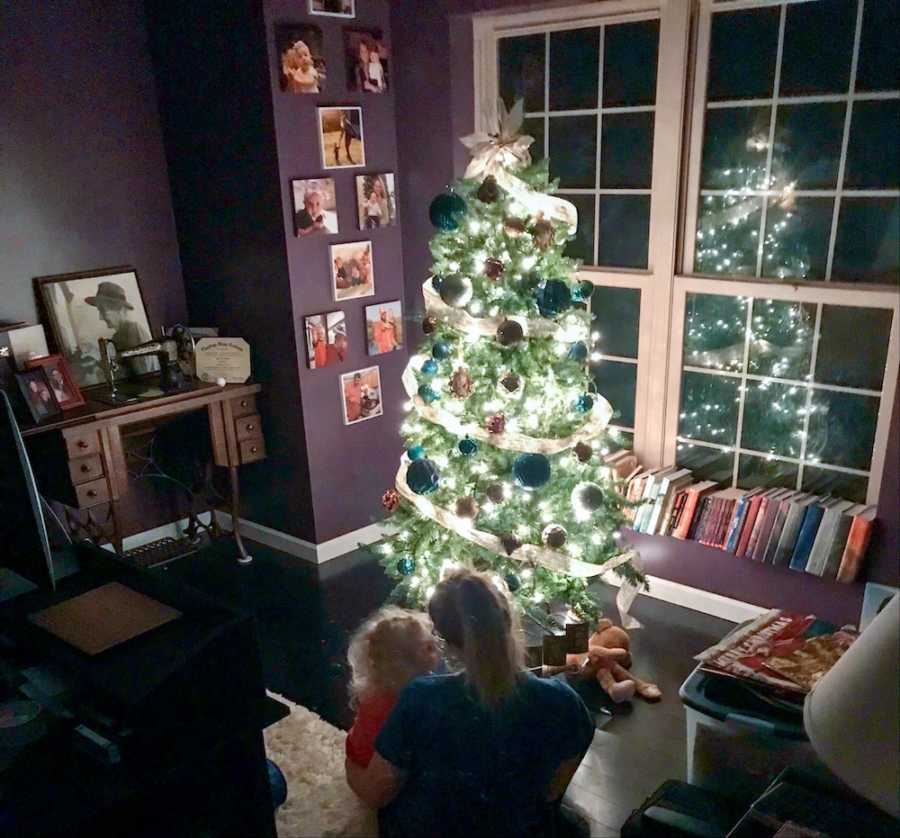
It was on one of those mornings that I began my own Christmas tradition. I woke while it was still dark outside, wrapped in a blanket, with a steaming mug of coffee in hand, and settled near the Christmas tree. The twinkling lights reflected softly on the snow that blanketed the world beyond the window. I just sat there, staring at the tree, letting the stillness settle into me until the sun slowly rose. In that peaceful, golden-hour light, my heart felt a fullness I hadn’t known in years. During those angsty teenage days, such peace was rare indeed.
Like many teenagers, I carried a heavy weight. I felt unseen, as if no one truly understood me. Every part of my life seemed burdened with expectation—relationships, perfect grades, my appearance, the relentless drive to be the best. I longed to leave my small town, to explore the world, to claim my independence and finally grow up. And yet, on that Christmas morning, despite the weight of my worries, I felt a spark of joy. I could dream vividly, imagine my future, and feel hope again. I believed, truly believed, that I could follow those dreams.
I held that morning close in my heart and recreated it each year afterward. Over the years, this simple ritual—watching the dawn through the glow of the Christmas tree—became my tradition. Now, nearly two decades later, it remains a steadfast part of my life. Over time, the dreams I whispered to myself in those quiet mornings—the dream job, a loving marriage, a happy home, a sense of financial freedom—fueled my hope. That hope kept me moving forward, even in the hardest times.

Time has passed, and I’ve lived so much since that first “Hope Tradition.” I’ve experienced the career I dreamed of, and even walked away from it to pursue another. I live in a beautiful home filled with love, alongside a husband I adore and two incredible children. I have more Christmas trees now than I can count, each a reminder of the magic of hope realized. And yet, this year, I’ve spent more mornings sitting in the dark than I care to admit. My mind spins with “if onlys”:
If only the kids would listen.
If only I had more time for my marriage.
If only we had more money.
If only the floors were finished, the basement done, the kids at Disney World.
If only I could finally complete the book I’ve been writing for years.
If only my life could keep pace with my constantly changing standards.
That last thought hit me harder than the rest. For the first time in a long while, the soft glow of the Christmas tree felt almost hollow. I realized that I had been placing my hope in the wrong places—dreams and “what ifs” that could never anchor me in the present.
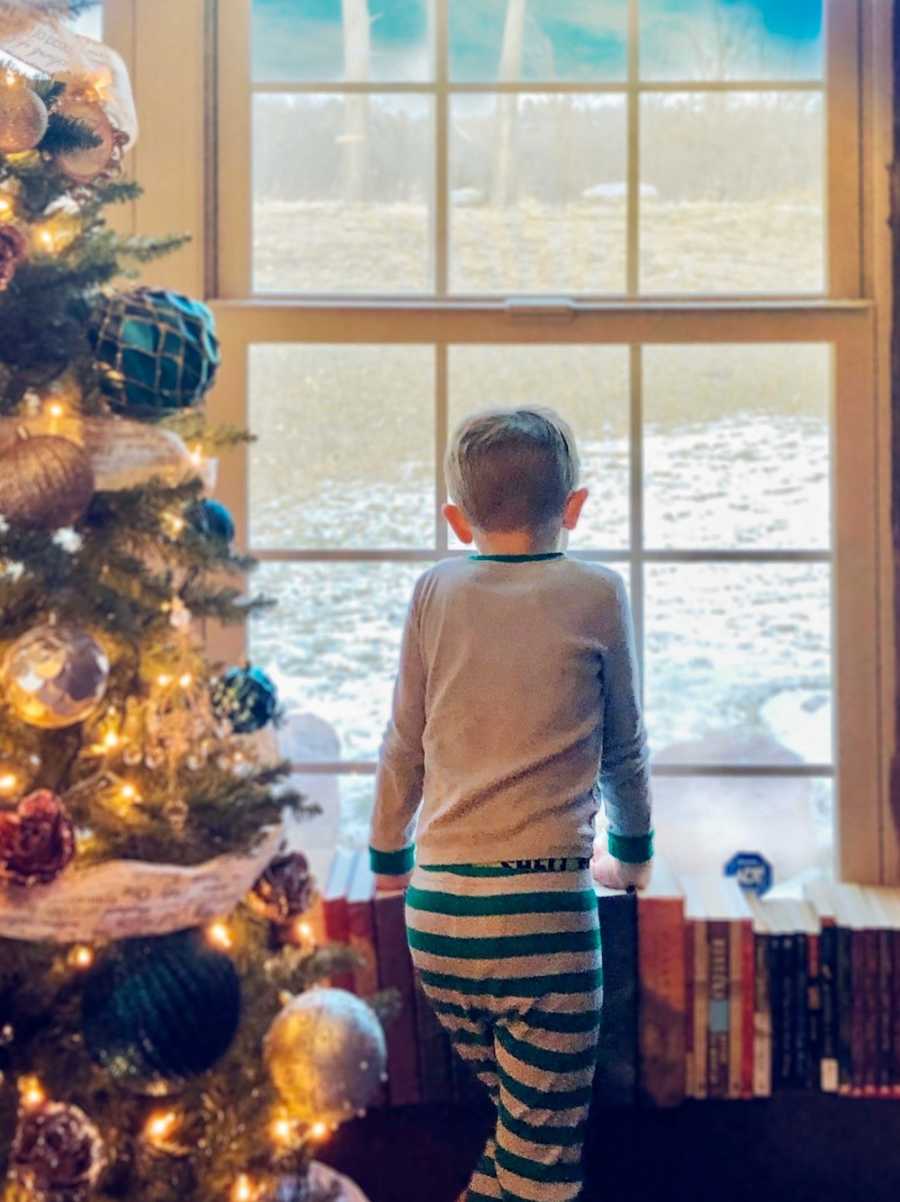
Hope is vital. It is the light that guides us out of darkness, the force that allows us to keep going when life is hard. Yet we often chase fleeting hope, hoping for the future instead of finding it in the now. The danger is that dreams, by their very nature, are never truly “here.” When we place our hope entirely in what might be, we risk a lifetime of longing, never fully appreciating what already exists. Dreams can inspire us, but they cannot sustain us entirely.
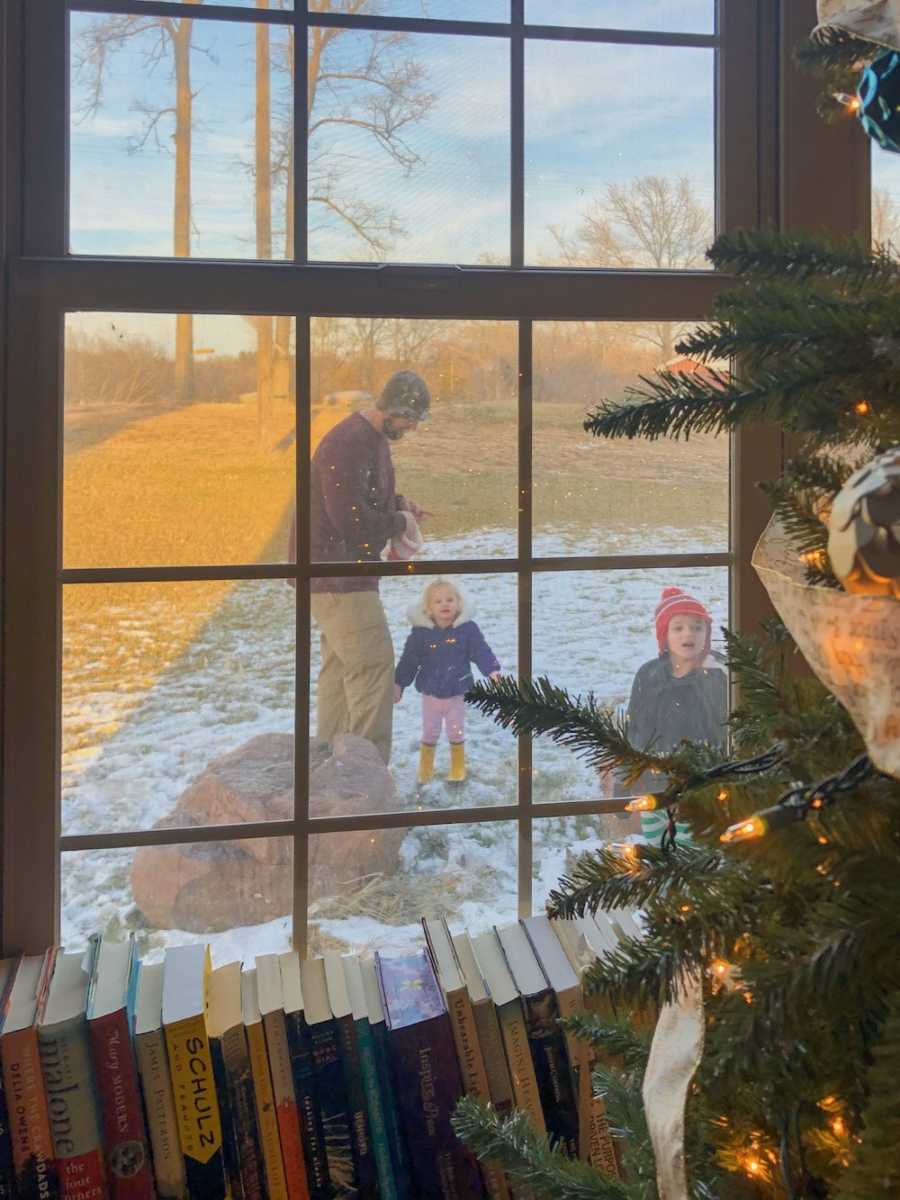
This Christmas morning, I understood something profound: the truest hope I’ve ever known has never been tied to my dreams or what I might someday achieve. Real hope comes from what I already have—the love that surrounds me, the faith that carries me, the goodness I’ve been able to give, and the beauty I’ve witnessed in others. Hope is in the memories of yesterday, in the people who have shaped my life, in the small, extraordinary moments that too often go unnoticed. It is not fragile; it is steadfast and solid.
So this morning, I choose a new tradition. I will no longer measure the magic of Christmas by the dreams I have yet to realize. Instead, I will sit by my tree, heart open, and feel hope rooted firmly in the present—the laughter of my children, the love of my husband, the life I’ve built. I will let this hope shine brighter than any expectation of tomorrow, and I will cherish every moment of its light. This Christmas, I am home, I am whole, and my hope has never felt more real.