
A Palestine Action activist who has been on hunger strike for 69 days is now at serious risk of death, the group has warned.
Heba Muraisi, 31, has lost more than 10kg, is struggling to breathe, and is suffering from persistent headaches after refusing food while held at HMP New Hall in Yorkshire. She began the hunger strike following her arrest over alleged break-ins and criminal damage.
Of the eight activists who initially joined the strike, five have since stopped due to health concerns. Muraisi, a former florist and lifeguard, continues to refuse food as she demands immediate bail ahead of her trial. Lawyers for the prisoners say they could spend more than a year in custody before their cases are heard.
Prisons minister Lord Timpson said the protesters face “serious offences including aggravated burglary and criminal damage,” and stressed that remand decisions are made by independent judges.
A leading neurologist has warned that Muraisi is now at risk of permanent health damage or death. Friends describe her as “very gaunt,” with prominent cheekbones and extreme physical exhaustion.

“I think she’s lost over 10kg now. She looks very different to the photographs you’ll see of her,” friend Amareen Afzal told Sky News. “She’s constantly suffering from headaches and lightheadedness. Sometimes she becomes so lightheaded she feels nauseous, which is quite common.”
Muraisi has also said that sleeping on one side of her body is painful and that she is aware her body “could fail at any moment.” Her next of kin, Francesca Nadin, said earlier this week that Muraisi was having difficulty breathing and thinking clearly.
“It is really concerning,” Nadin said. “But mentally, she is still strong and able to laugh and joke. We just don’t know when that deterioration will come.”
Muraisi has now surpassed the length of the hunger strike undertaken by IRA prisoner Bobby Sands, who died in 1981 after 66 days without food. Palestine Action’s strike is the largest in the UK since that year, when 10 IRA prisoners died.

Since the strike began more than two months ago, several protesters have been rushed to hospital. Only three remain on full hunger strike, while one has switched to intermittent fasting due to an underlying health condition. Teuta Hoxha and Kamran Ahmad are continuing alongside Muraisi.
Neurologist Dr David Nicholl, who has studied prison hunger strikes for over 20 years, said the most dangerous period often comes when strikers resume eating.
“The biggest immediate risk is refeeding syndrome,” he said. “After not eating for a prolonged period, calories must be reintroduced very gradually. People have died after ending hunger strikes due to this condition.”

Hoxha has been awaiting trial for 13 months over alleged criminal damage, aggravated burglary, and violent disorder at an Elbit Systems factory in Filton, near Bristol. The incident is alleged to have caused more than £1 million in damage to the company’s research centre. A prison officer was also allegedly left with a fractured spine, a court heard.
Other protesters are accused of breaking into RAF Brize Norton and damaging two military aircraft. Palestine Action previously claimed that two activists infiltrated the base and sprayed red paint into the engines of two Airbus Voyager planes before escaping undetected.
All defendants deny the charges against them.
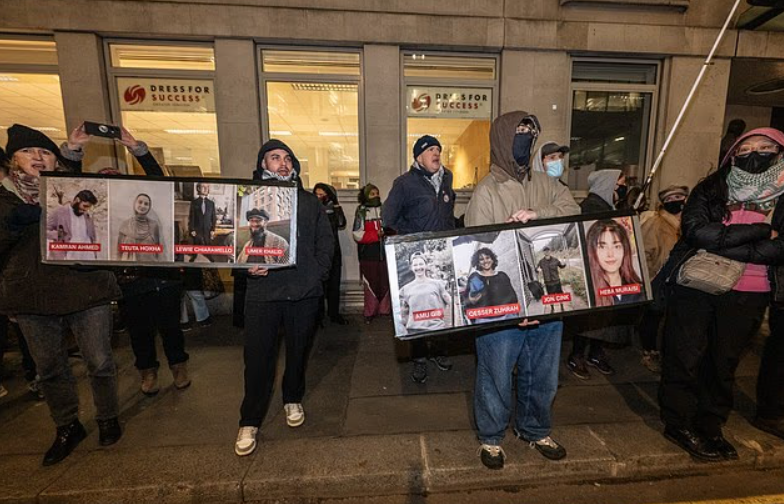
The remaining hunger strikers say they will continue until Palestine Action is de-proscribed, the UK ends support for companies supplying weapons to Israel, and they are granted immediate bail or transferred to prisons closer to their families.
Lord Timpson said prison healthcare teams are providing NHS care and monitoring the situation closely. He rejected claims that hospital treatment is being withheld, saying prisoners are transferred when medically necessary and several have already received hospital care.
“These prisoners are charged with serious offences,” he said. “Remand decisions are for independent judges, and ministers will not intervene in ongoing legal cases. Doing so would be unconstitutional and inappropriate.”