On August 4, 2010, my husband Matt and I arrived for our routine 19-week ultrasound with our fourth baby. From early on in this pregnancy, I carried a heaviness unlike with my first three. I couldn’t shake the unease that something might be wrong. Seeing children with disabilities would stir a quiet but insistent worry inside me, and in the weeks leading up to this ultrasound, I had been awoken from three vivid dreams—each one showing me being told my baby would die. They felt so real. Having experienced a miscarriage between our second and third children, I tried to chalk up my anxiety to past pain. Still, that morning, as I spoke with my mom on the phone before leaving, I confessed, “I have a very bad feeling something is wrong with this baby.” Deep down, I had already braced myself for Down syndrome.
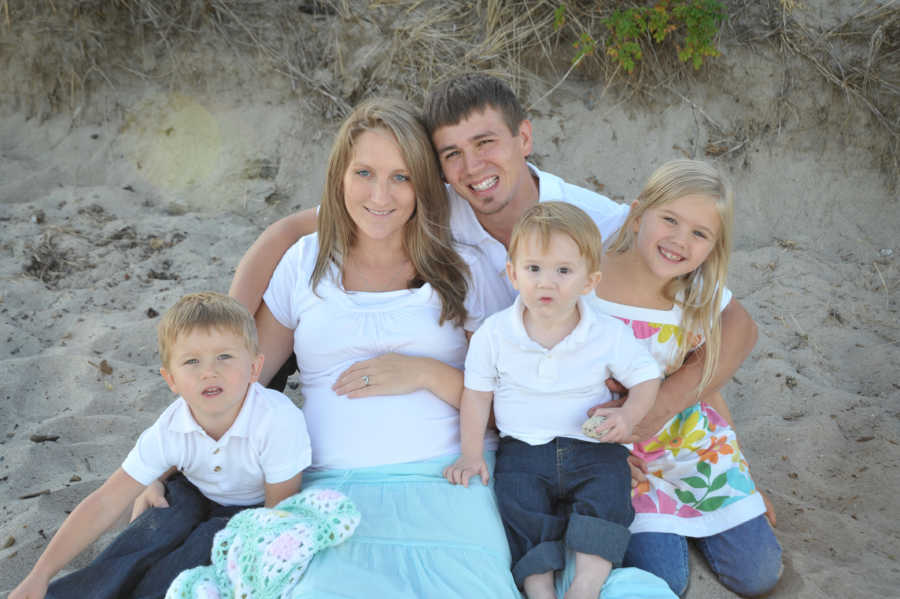
As we settled into the scan, the ultrasound tech asked with a smile, “Is this going to be it for you?” I returned her smile and replied, “If it’s a girl, it is.” We chatted about how excited Desirae, our seven-year-old, would be. Within moments, the tech announced, “You’re going to have a very happy big sister at home… It’s a girl!” Tears of joy ran down my face as I whispered to Matt, “I can’t wait to tell Des!”
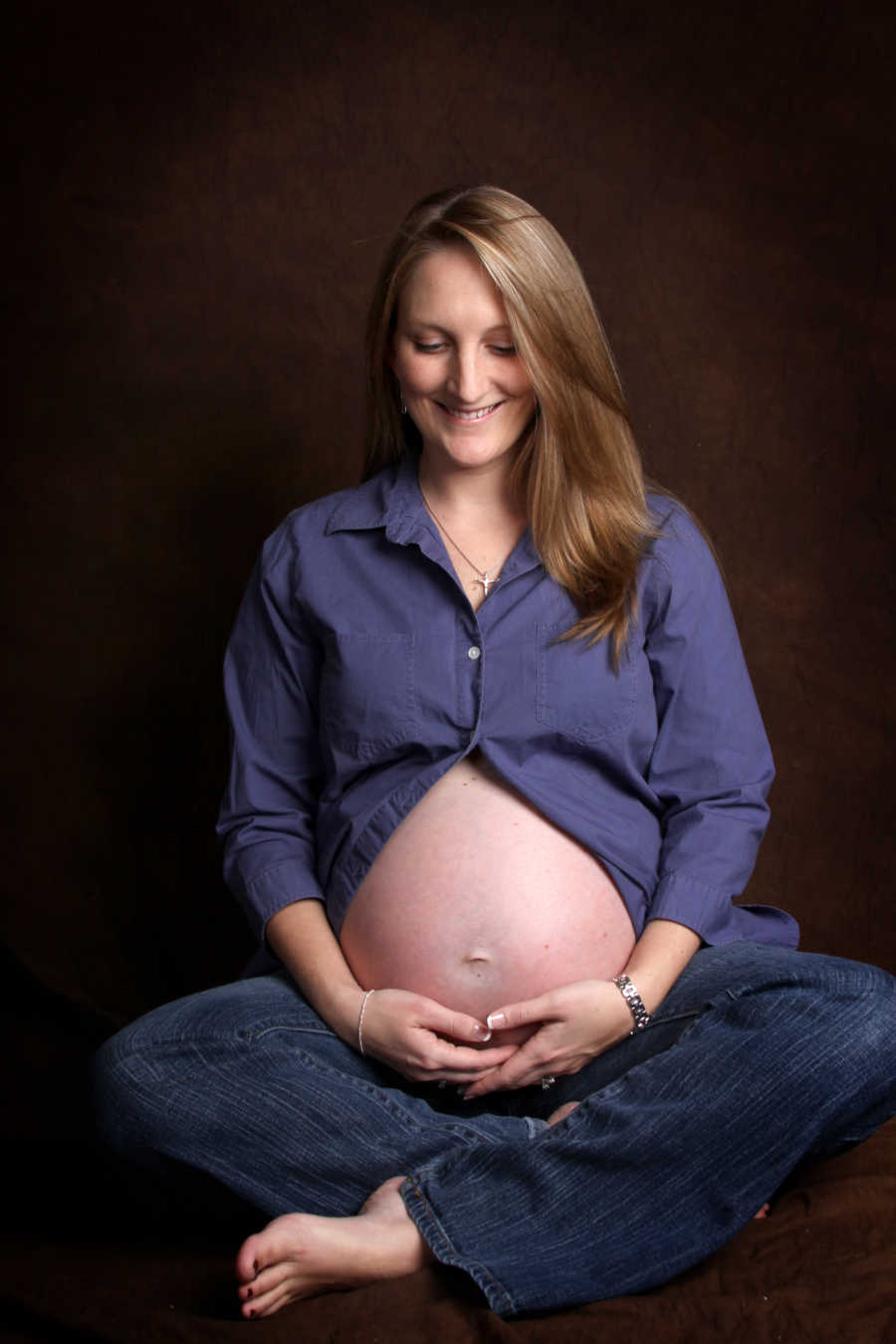
But that joy was fleeting. The room’s atmosphere shifted almost immediately. The tech grew quiet, repeating measurements over and over. Matt leaned forward, concern etched across his face. “Are you having trouble measuring her head?” he asked. Without looking up, she replied, “She’s just dancing all over the place.” I laughed nervously, joking that she was a little dancer, just like her mama. But the laughter faded. Minutes stretched on, the tech still focused on the screen, avoiding the usual profile shot. When Matt pressed again, “Is something wrong with her head?” she finally said, “I’m going to let the doctor explain that to you.”
I looked at Matt for reassurance and saw his head bowed in prayer. At that moment, I knew my worst fear had arrived, though I had no idea what form it would take. Clutching his hand, I prayed alongside him, trusting the words he whispered to God.
By God’s grace, we had a follow-up appointment scheduled immediately after the ultrasound. The tech handed us a small picture of our baby’s foot and whispered, “That’s all I can give you.” As we left the dimly lit room, we walked down the empty hospital hallway in silence, hands entwined. I finally whispered, “This is what He was preparing me for.” God had been close during the weeks leading up to this moment, and I felt Him guiding me toward the path of the pain ahead.
Sitting in the waiting room, staring at her tiny foot in that photo, my heart raced. “I don’t care what is wrong,” I thought. “I just don’t want her to die. Please, don’t let her die.” It was then I realized: my worst fear wasn’t disability—it was the thought of losing her entirely. I would have embraced her in any condition; I just wanted her alive.
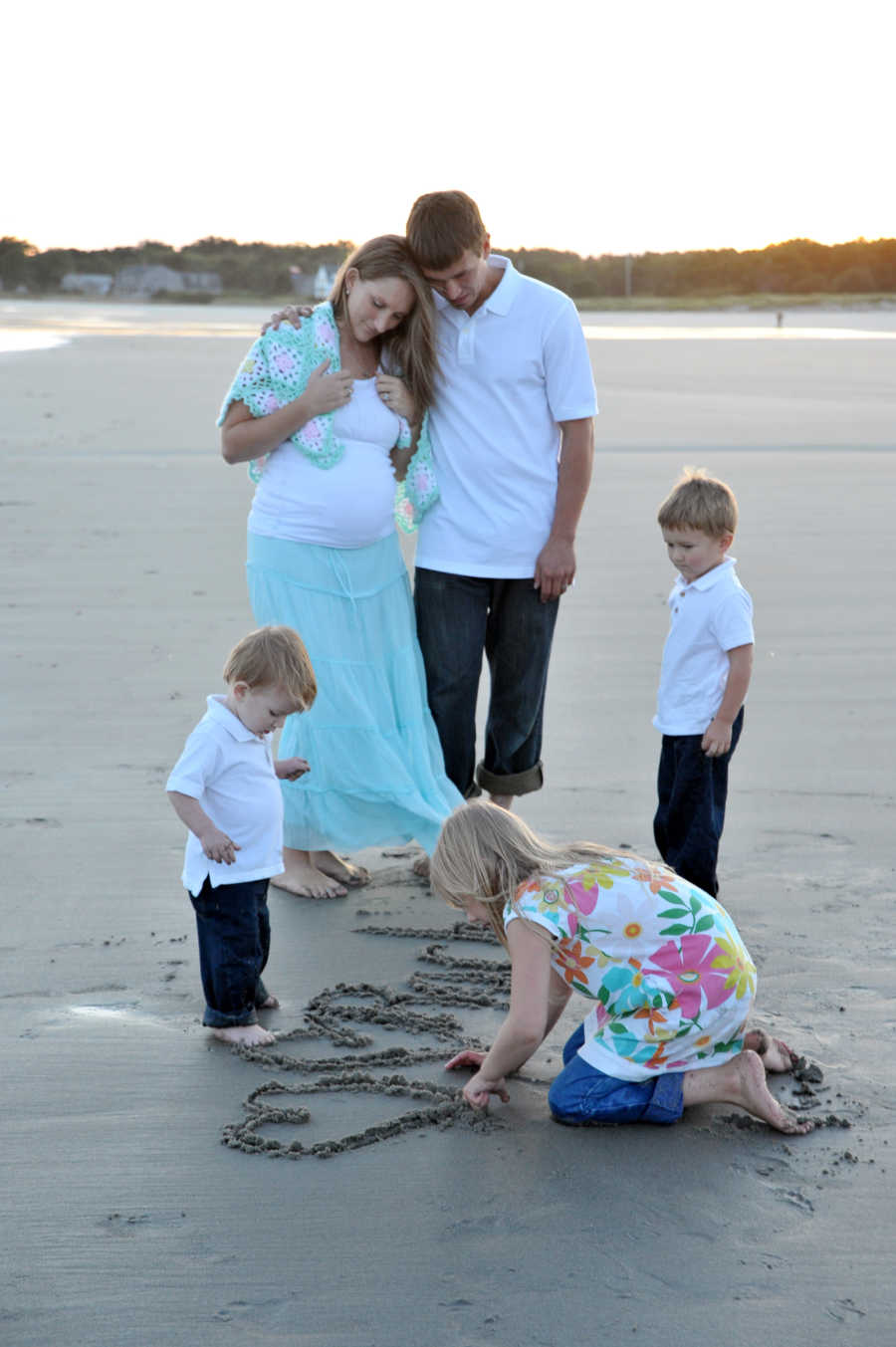
When the doctor finally came in, she said, “This baby has anencephaly.” I had never heard the term. Mustering every ounce of courage, I asked, “She’s going to live, right?” Her words cut through me like ice: “These babies don’t live.” Then she added, coldly, “You can make an appointment to talk about your options—termination.” I refused immediately, shaking my head, and she handed me a box of tissues before leaving.
The grief hit like a storm I couldn’t escape. I screamed, I thrashed, I felt my heart breaking in real time. A part of me died that day in that hospital room. Yet, even in the chaos of sorrow, Matt’s bravery shone. Without hesitation, he said, “We’re going to give her a name.” And so she became Rachel Alice, our second little girl. That evening, we had to tell Desirae, her big sister, about the prognosis. Watching her little smile fall into tears was nearly unbearable—a reminder that our children grieve with us, even in ways we cannot fully understand.
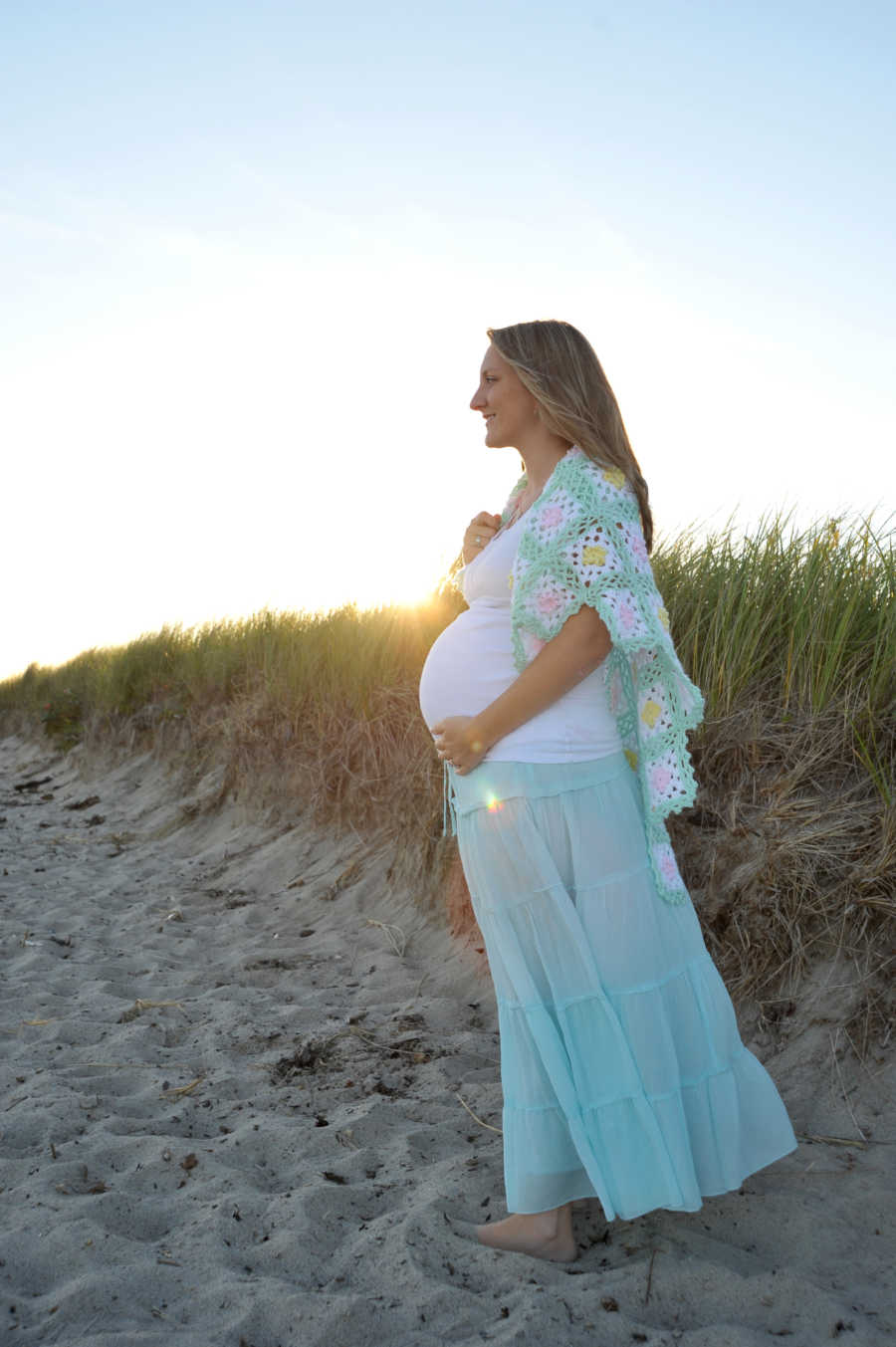
The next day, we sought a second opinion at Maine Medical Center and met Dr. Pinette, the only doctor I ever fully trusted during this journey. As weeks passed, new complications arose, like polyhydramnios—excess fluid threatening early labor. Dr. Pinette helped guide difficult decisions, including an elective C-section in hopes of meeting Rachel alive. Insurance battles and medical roadblocks made each step exhausting. But through it all, Matt’s quiet strength anchored me, and God’s presence never left.
I sent an email to family and friends that night, sharing the news in one breath, because the weight of telling everyone individually was too much. I wrote about Rachel’s diagnosis, our hope for a miracle, our faith, and our plan to celebrate her life no matter how brief it might be. I asked for prayers, support, and strength. And the responses came pouring in—hugs, words of encouragement, practical help, and ceaseless prayers.
I began writing a blog the following week. At first, my posts were short, raw reflections of daily heartbreak. Over time, thousands of people began following Rachel’s story. They wrote to me, inspired by my love for her and my faith in God, even amidst unimaginable loss. Writing became therapy, a ministry, and a gift. Through Rachel, I discovered the power of vulnerability, of sharing pain, and of allowing God’s work to shine through it.
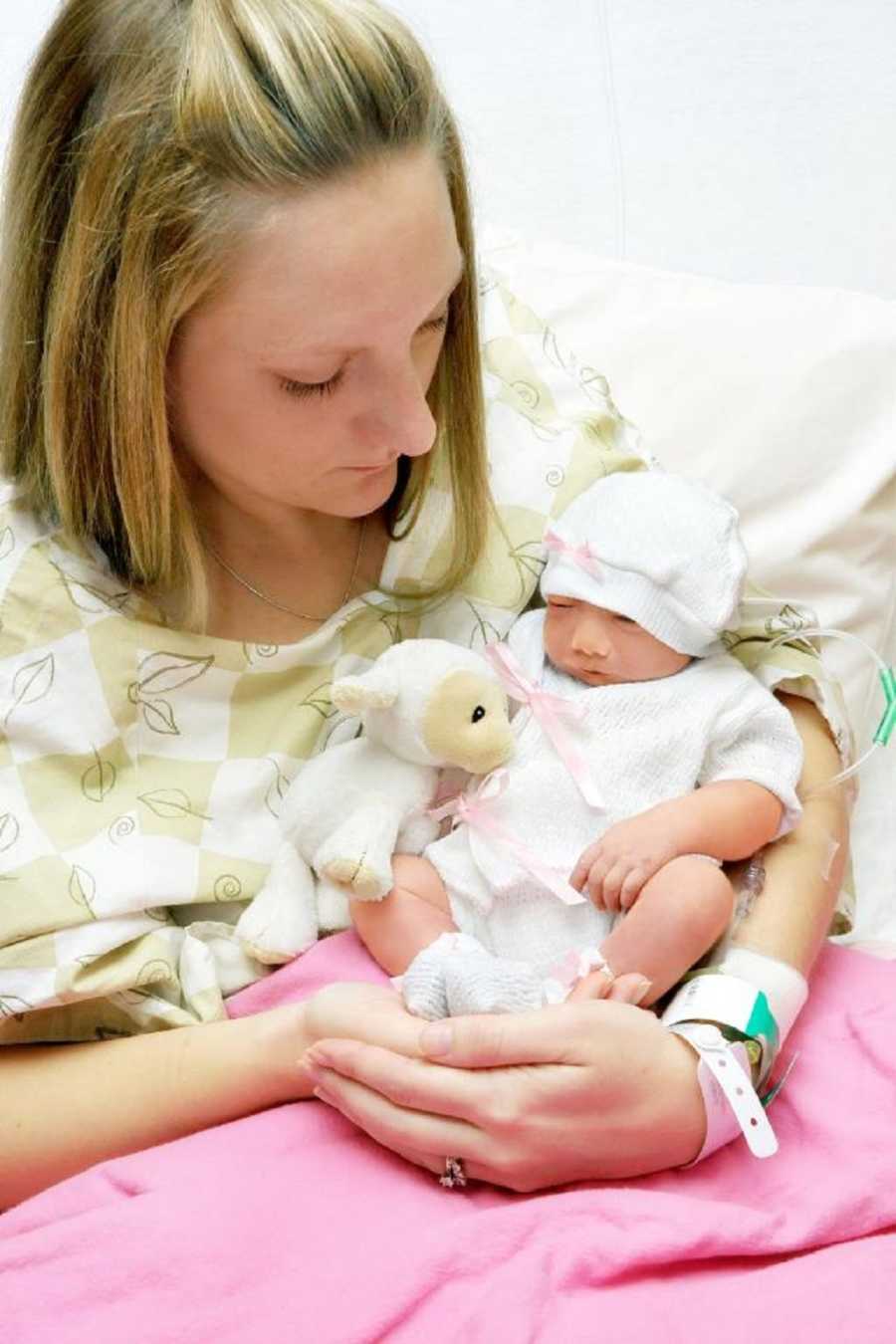
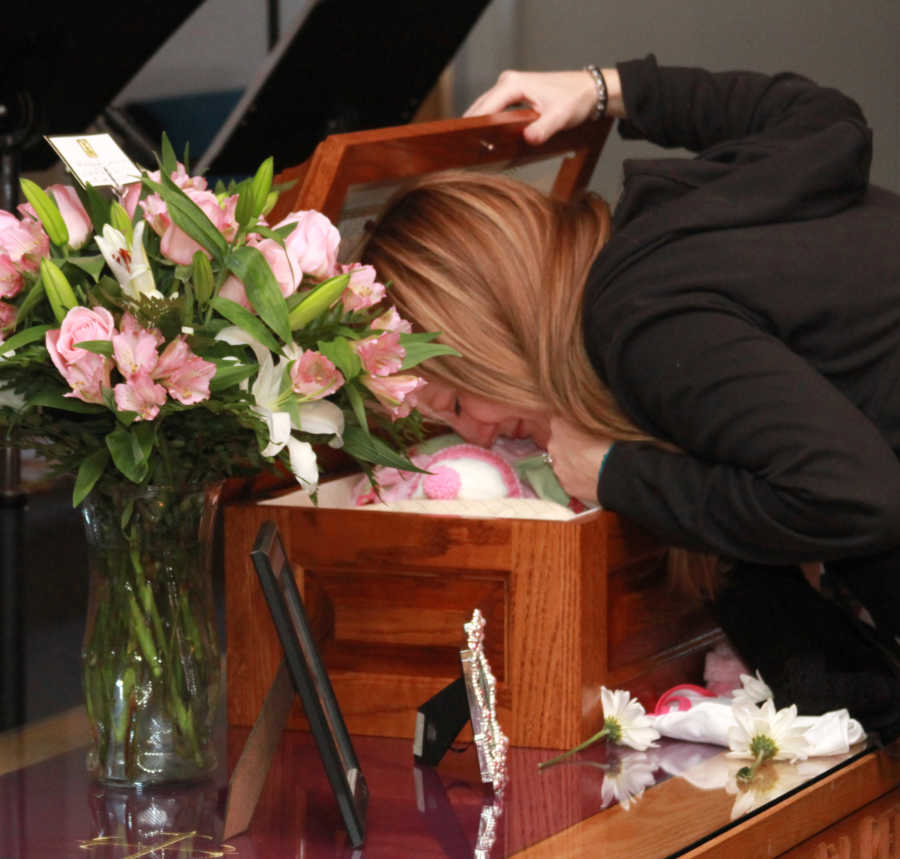
Rachel was born on December 3, 2010, at 37 weeks, via C-section. She lived 43 precious minutes in our arms. We celebrated her with family—her siblings by her side—singing Happy Birthday, taking pictures, and capturing every handprint and footprint. The next day, we handed her over to the funeral home, each of us cradling grief in our own way. Saying goodbye was excruciating, yet even in that pain, I felt God’s comfort and presence.
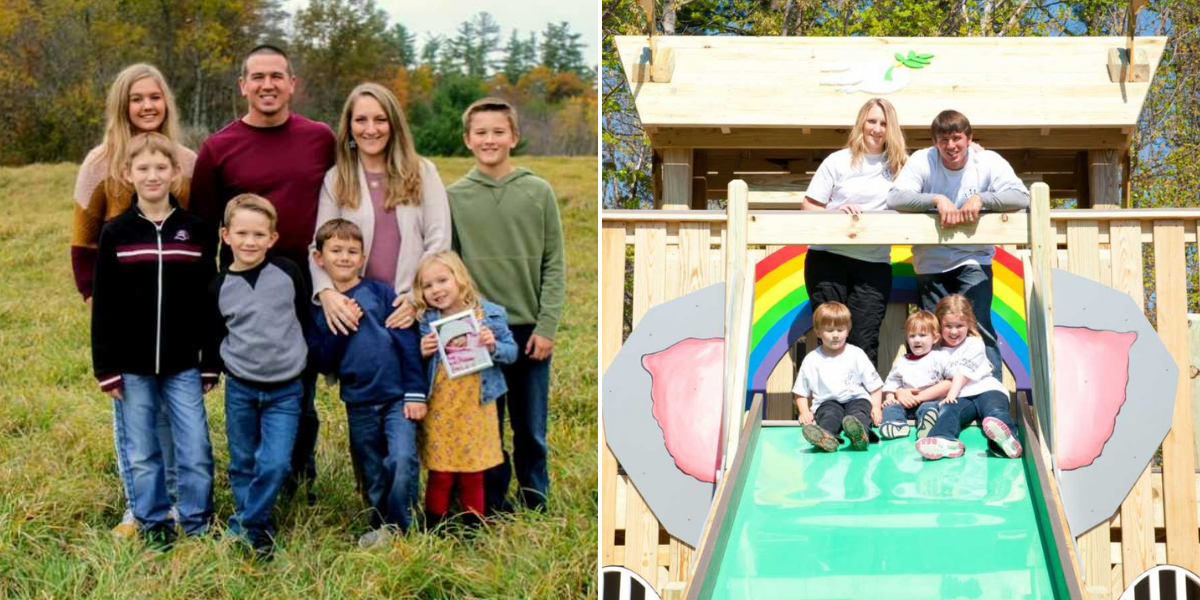
We had celebrated Rachel before her birth with over 85 friends and family at a baby shower. Donations went toward a memorial playground, which eventually became the Ark Playground at our church, opening on my first Mother’s Day without her. We also established Baby Rachel’s Legacy 5K to raise awareness for anencephaly, connecting with other parents who had walked similar journeys. These acts of love turned our grief into something tangible, something lasting, a way to honor Rachel’s short but profoundly impactful life.
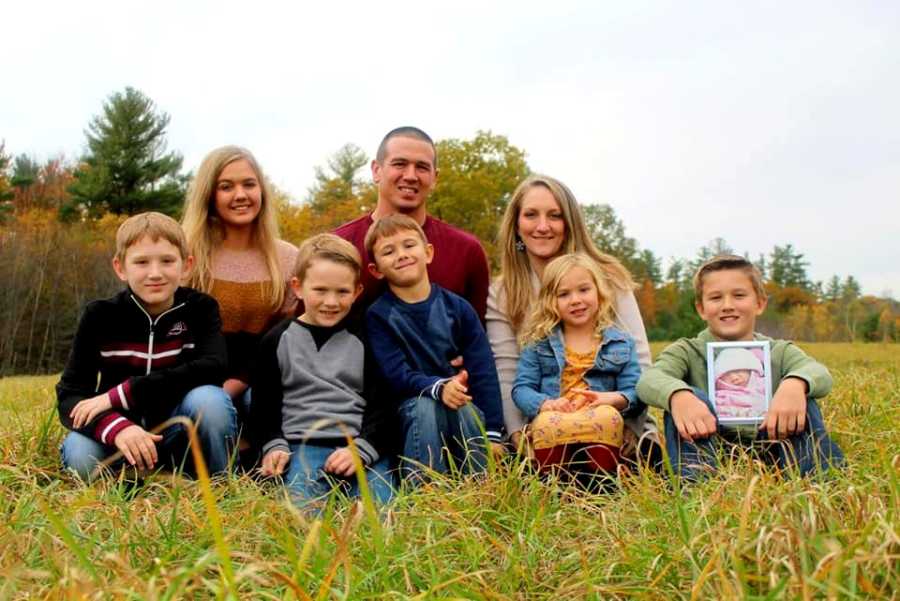
Today, I sit at home surrounded by our children, three older siblings, and three younger ones, all shaped in some way by Rachel’s story. Losing her changed my perspective on family, on life, and on God’s plan. Her absence is deeply felt, yet her presence is woven into the fabric of our lives. She made me stronger, braver, more compassionate, and more aware of life’s fleeting beauty.
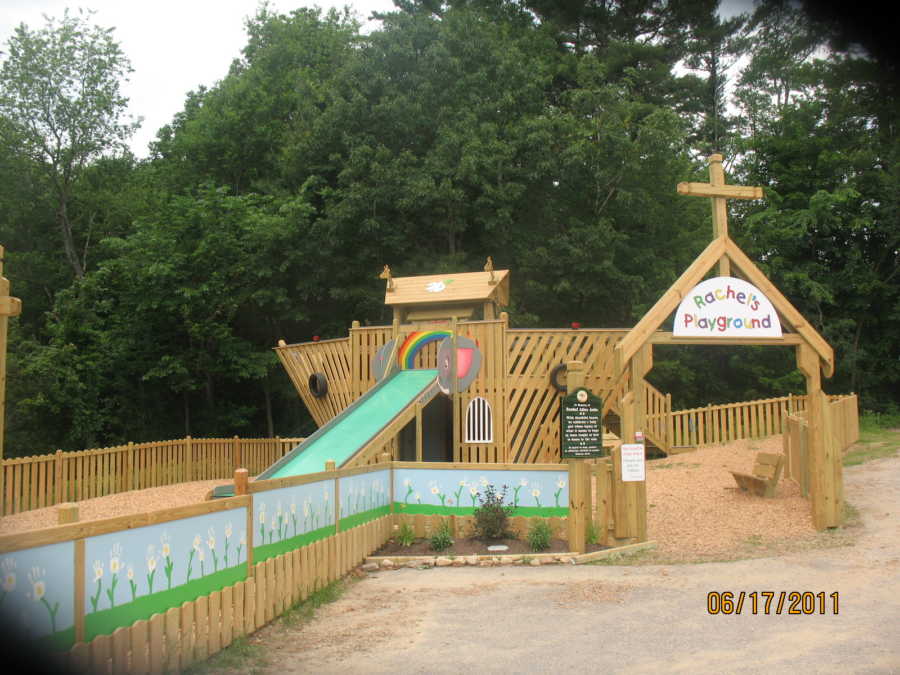
December 3 marked her ninth birthday this year, and as always, it brought both sorrow and gratitude. Rachel’s life, though brief, was powerful. She taught me to embrace faith in the face of despair, to love unconditionally, and to treasure every heartbeat. Her story lives on through our family, through the playground, through our community, and through the countless lives touched by her legacy. She rests in the arms of our Savior, and one day, I will hold her again. Until then, I am forever thankful for the honor of being her mama.