“What is that?” our oldest son asked, his eyes wide as he gazed around Legoland Florida. He had just turned nine, and the towering structure in front of him was impossible to ignore.
“A roller coaster,” my husband answered casually, trying not to let his own nerves show.
“Does it get any higher than that?” our son asked, squinting at the ride as if measuring the challenge it presented.
“No,” my husband replied, though we both knew the truth in our hearts: height wasn’t the only fear this boy faced.
“I want to ride it,” our son stated, matter-of-factly.
My husband and I exchanged a glance that said everything—disbelief, shock, and, secretly, a tiny surge of hope. Our son is autistic and also navigates sensory processing disorder and anxiety. What most children find simple, fun, or joyful—like opening presents, trying new foods, or playing with other kids—can be overwhelming, even frightening, for him. People often assume that we don’t believe he can do things. That’s far from true. He is capable of so much. It’s just that his fears are sometimes stronger than his desire, so he hesitates, or refuses, to act.
So why take him to Legoland, of all places? We hoped that his love for Lego—so intense it could light up his world—would be stronger than his fears about the crowds, the noise, and the chaos of a theme park. We were in Florida for the week, staying at a beach house with my birth family. For years, one of his biggest fears had been water. He’s made progress recently, but asking him to go to the beach daily seemed unfair, knowing it wouldn’t bring him joy. Legoland seemed like a compromise: a place both our boys could enjoy, where Lego and laughter would outweigh apprehension. And so there we were, considerably lighter in the wallet after the price of admission, staring up at a roller coaster.
“You want to ride that?!” I asked, my voice trembling between shock and excitement. After all, he had refused to ride the carousel—the gentlest ride in the park—just moments earlier.
“Sure!” he said, calm and determined.
My heart pounded in my chest. I don’t do roller coasters. I avoid elevators whenever I can. And yet, if he was going to try it, I couldn’t back down. Hand in hand, we walked toward the entrance. He led with determination; I followed with courage I didn’t know I had.
Our younger son, six and a half, fearless in almost every situation, eyed the ride nervously. “Is it stable? It doesn’t look very stable!” he asked, concern creasing his young face. We assured him it was, though the nearby maintenance gates and ominous signs reading “Caution: Area of Death” did little to calm our nerves.
“We’re going to die! Oh, we’re going to die!” he shouted, half-serious, half-excited—an echo of the fear his older brother had felt, though he rarely admits it. I secretly shared the sentiment but kept it to myself.
At last, we reached the ride entrance. There was no wait, which was both terrifying and a blessing—it gave none of us time to overthink. We quickly boarded, youngest with dad in the front, oldest with me behind them. Our kids’ smiles lit up their faces, unaware of the roller coaster’s looming thrill.
As the cart clicked upward toward the first hill—the small one our son had noticed from afar—I closed my eyes, gripping the safety bar. I wanted to stay brave for him, to model courage, but terror had its grip. Occasionally, I peeked, seeing my son’s head down, eyes squinched tight, yet still holding on. Then came the screams: laughter, fear, exhilaration—all blending with the swoosh of the ride. Some were ours; some were theirs. I was too scared to tell the difference.
The ride ended far too quickly. Somehow, we had survived. We stepped off, hearts racing. Smiles faded into relief. Our oldest son turned to us and said, without a hint of hesitation, “I’m never doing that again!” I nodded in agreement, sharing the sentiment entirely.
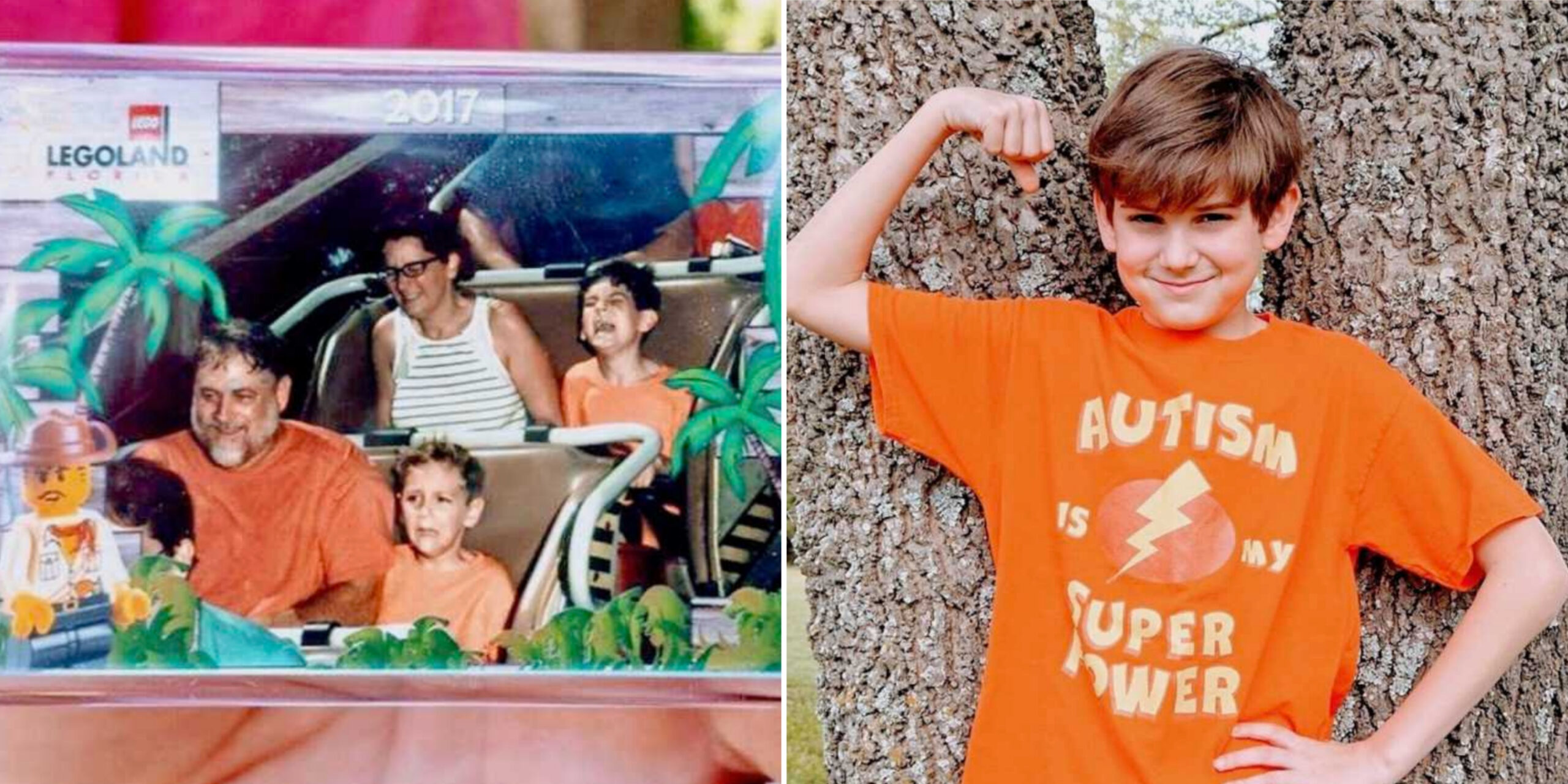
We watched the next group of riders take off and made our way to the display where ride photos were shown. Normally, we wouldn’t buy such a photo—not just for the price, but because rides weren’t usually part of our plans. But seeing ourselves captured in that precise moment was irresistible. We chose the cheapest option, a magnet, which now sits proudly on our fridge alongside magnets from trips over the years.
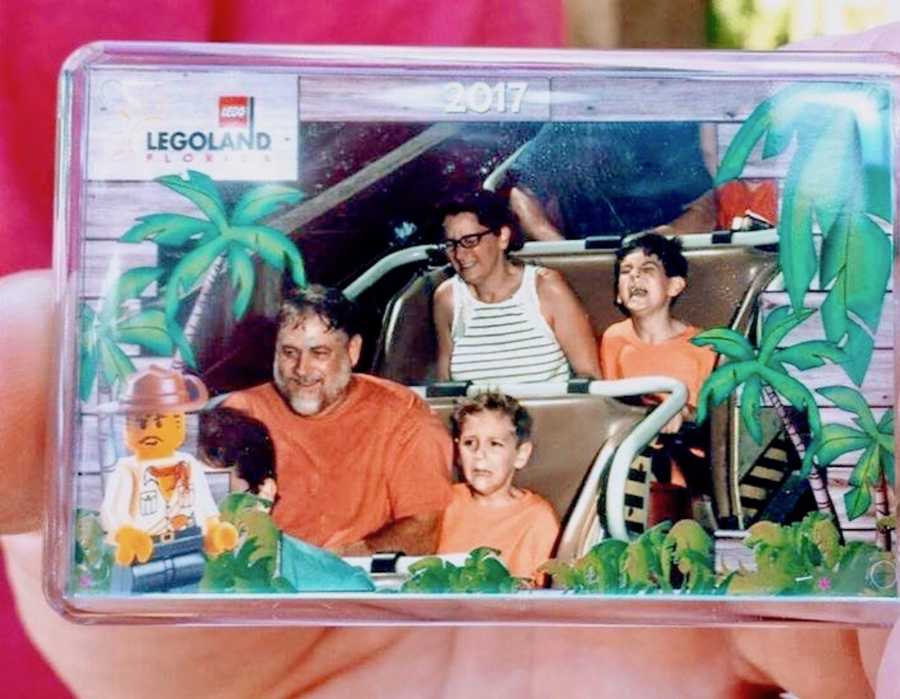
The photo perfectly captured our family—our fear, our courage, our unity. It graced our Christmas card last year, a reminder of an extraordinary day. More importantly, it captured the moment our son faced a fear that had seemed insurmountable. Now, when he hesitates, when anxiety threatens to hold him back, we remind him: if he could ride a roller coaster, he can face anything. It doesn’t always work perfectly, but it brings a smile and a renewed confidence: he can try, he can endure, he can overcome. And for us, that alone was worth every penny we spent at Legoland.